3,500 m² in Caracas turned into a journey across a country
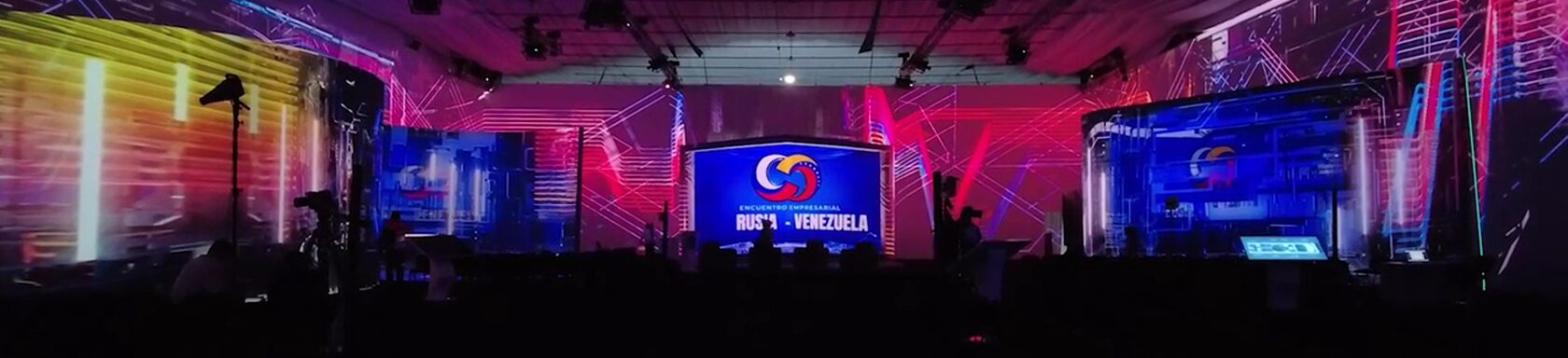
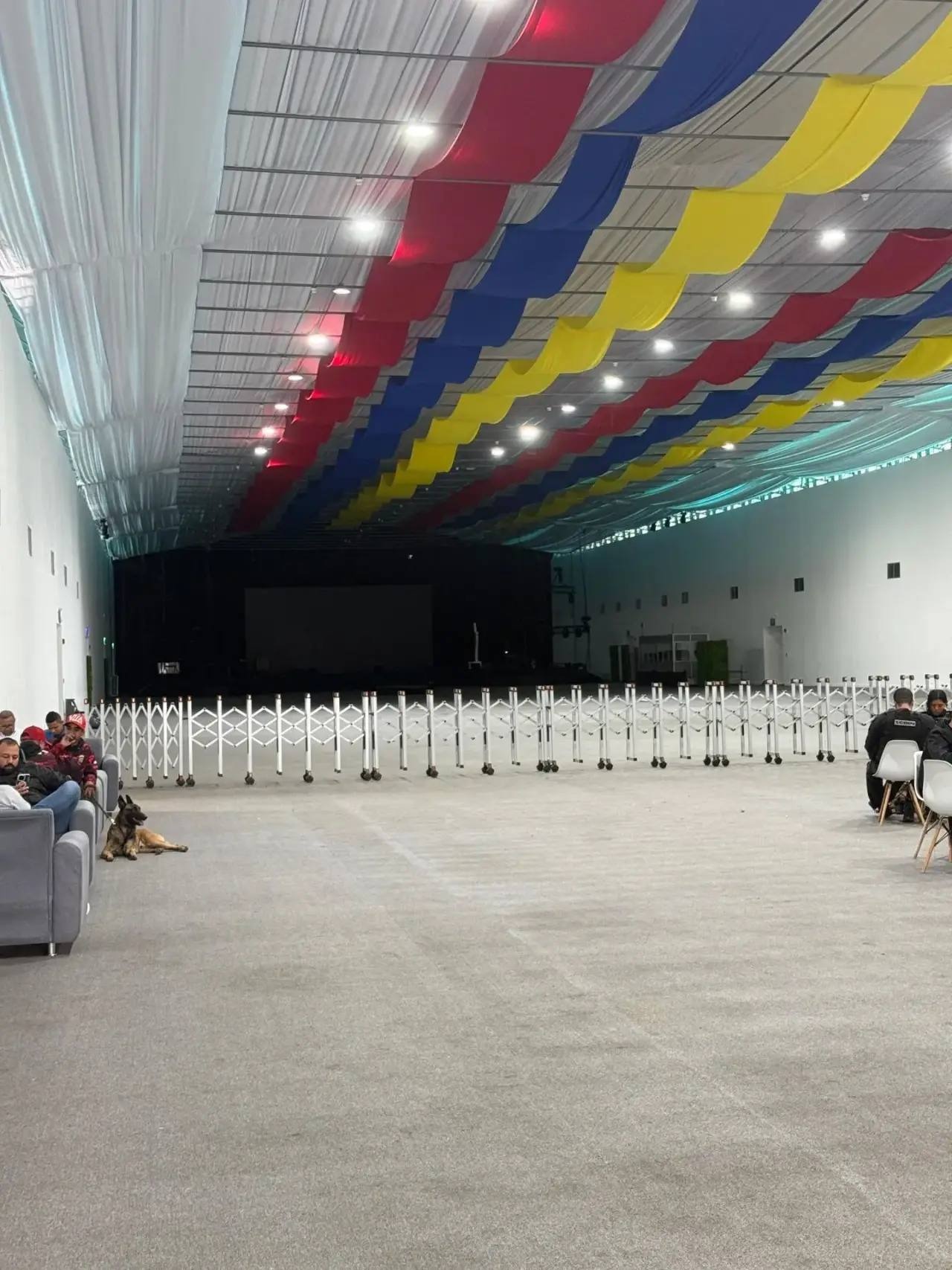
In October 2025 Caracas hosted the first Russia–Venezuela business forum. The organiser was Rostec; our direct client was Evrofinance Mosnarbank. The venue was a bare 3,500 m² hall with no décor of any kind — everything a guest would see had to be brought in and built.
Studio 22.12 ran the full cycle: concept, budget, technical design, all content, and supervision of contractors in Russia and Venezuela. We did not install the equipment ourselves — we directed those who did, in two countries at once.
The brief
There was no brief. Only an empty hall and a deadline for the budget.
The client asked for “an event with some modern multimedia in it”, pointed at the hall, and needed the budget approved immediately — with no programme, no list of participants, and no idea which industries the guests would come from.
Talks ran from February to August. Technical design and the entire content production had six weeks — for nine industry shows, an opening show, presentation décor and a closing programme.
For that volume, at that resolution, six weeks is an emergency schedule.
What we did
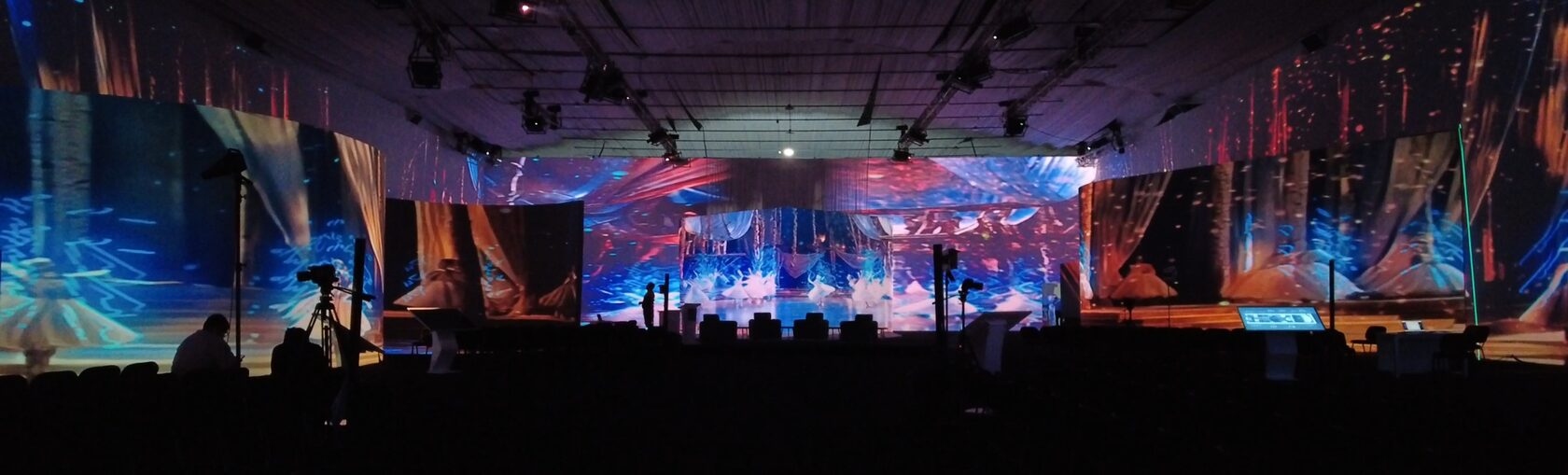
Nine industries on five surfaces, changing completely halfway through the day
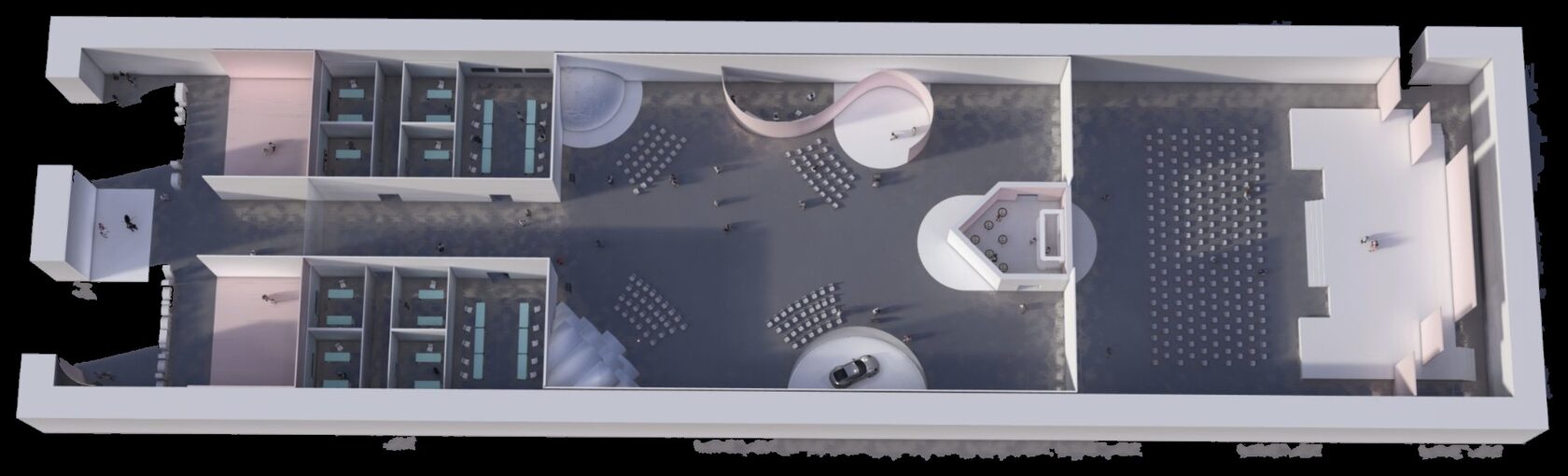
We split the hall into zones and led the guest through them as a route. Each zone carried one industry: a two-minute show about it, then speakers from both countries on the same spot.
Four industries before lunch, five after — so five surfaces changed content completely in the middle of the day, and a guest returning to the same hall found a different programme.
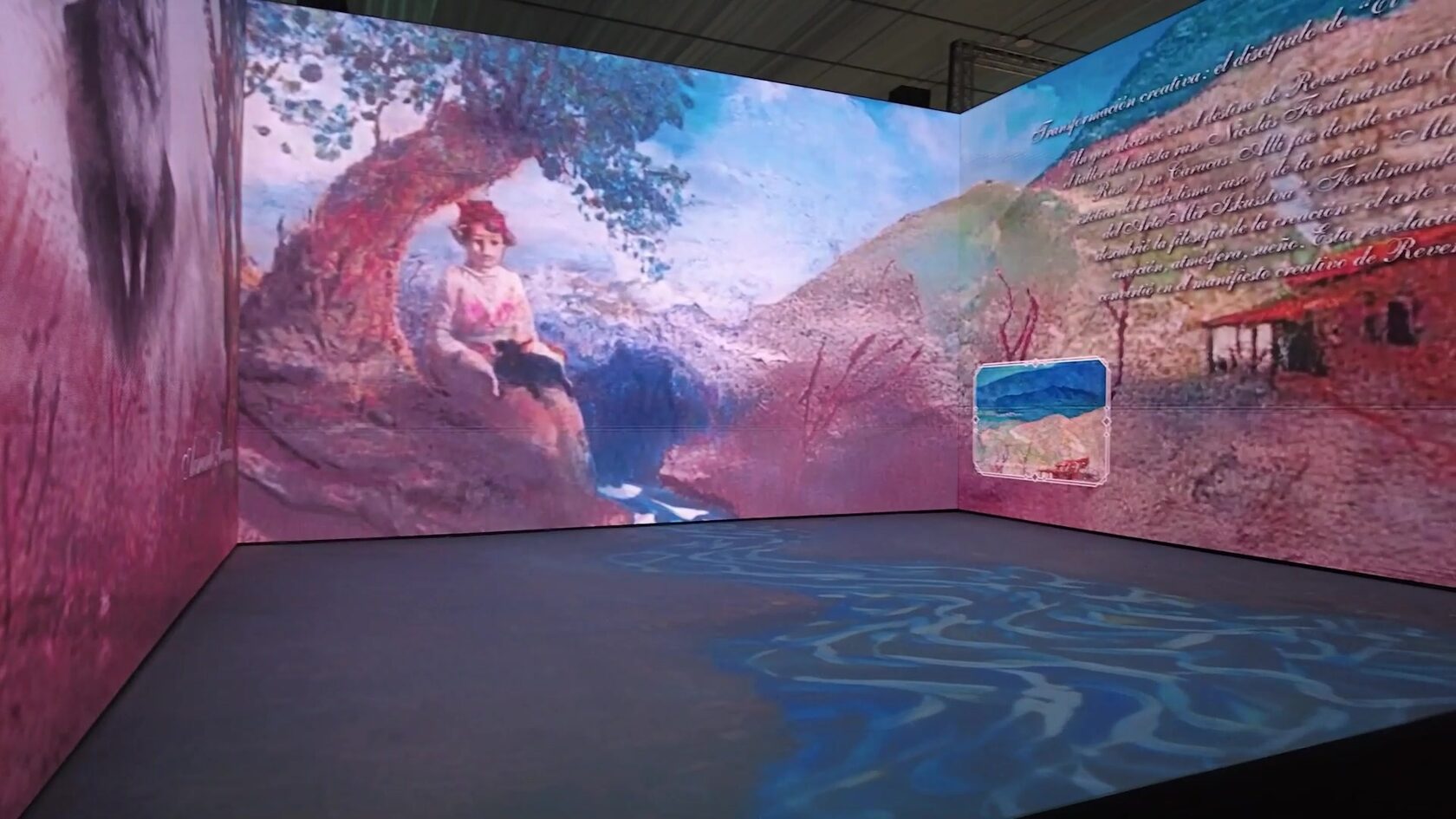
Two painters, two countries
The welcome zone held two immersive LED rooms built around Nikolai Ferdinandov, a Russian artist who lived in Venezuela, and Armando Reverón, a Venezuelan who carried on the Russian school. Walls and floor together — the guest walked into the canvas.
A corridor that tells a hundred years in forty steps
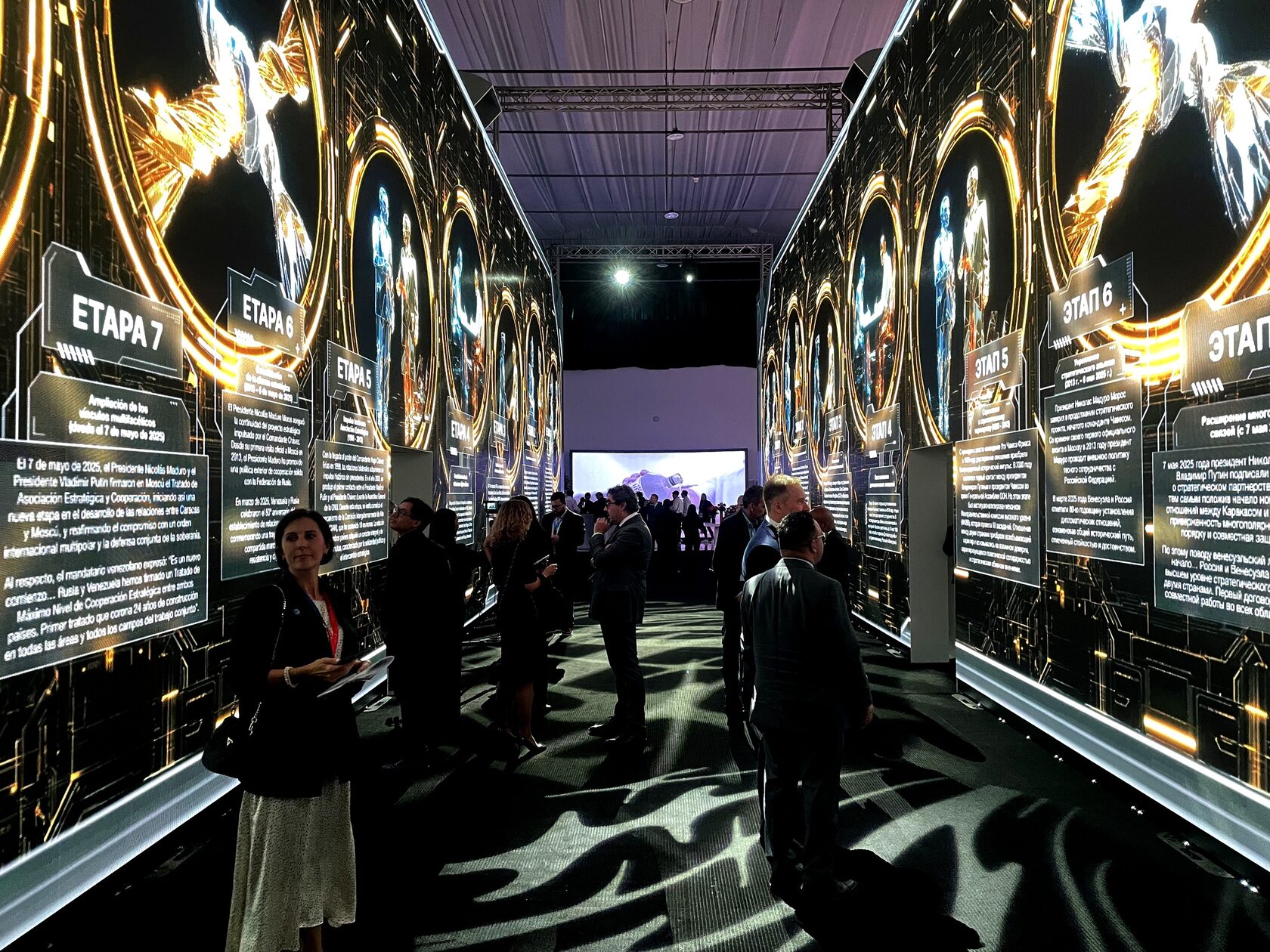
An LED corridor linked the welcome zone to the main hall and walked the guest through the history of relations between the two countries, stage by stage, in Russian and Spanish at once.
Behind its walls we designed ten meeting rooms of different sizes, so the corridor did double duty — narrative on the outside, negotiations on the inside.
The main hall
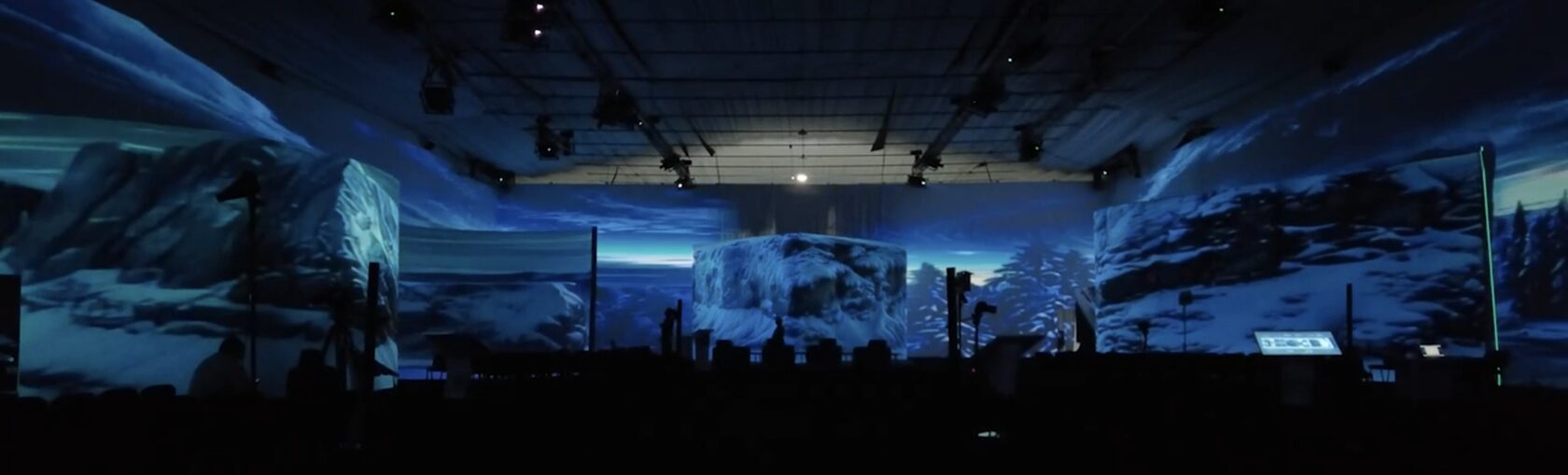
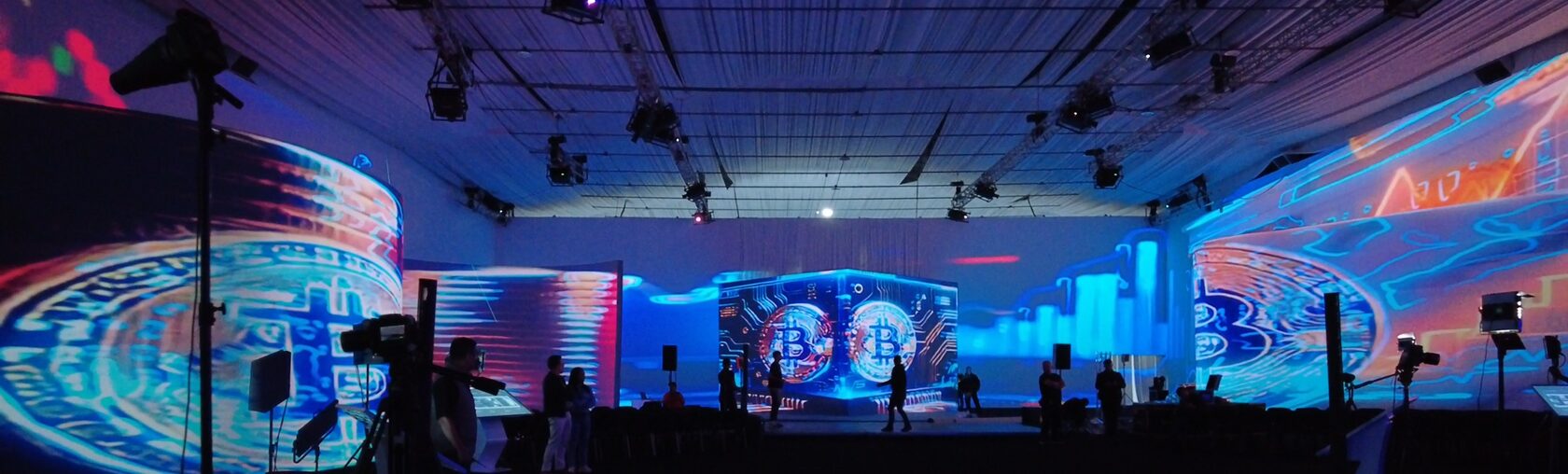
Projection only. Four free-standing objects sat against the walls and were mapped together with them, so the edge between object and wall disappeared.
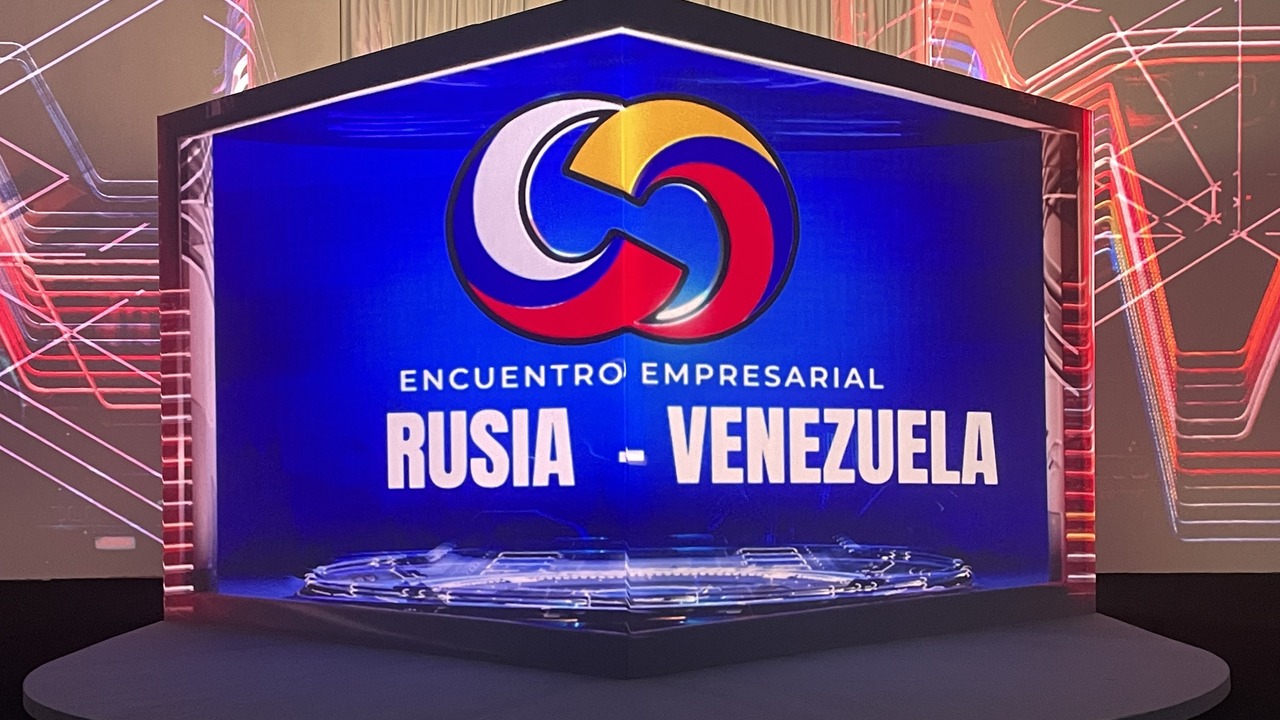
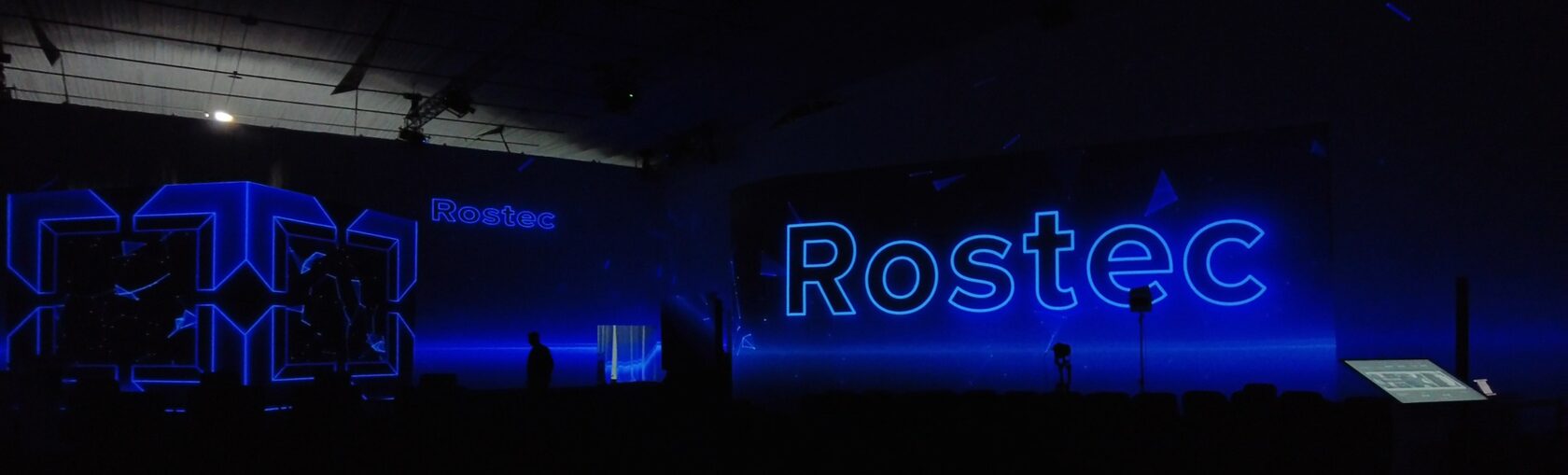
A fifth object — a cube carrying the forum logo — stood in the centre, hiding an immersive LED room where Venezuelan coffee culture flowed seamlessly into Russian tea tradition.
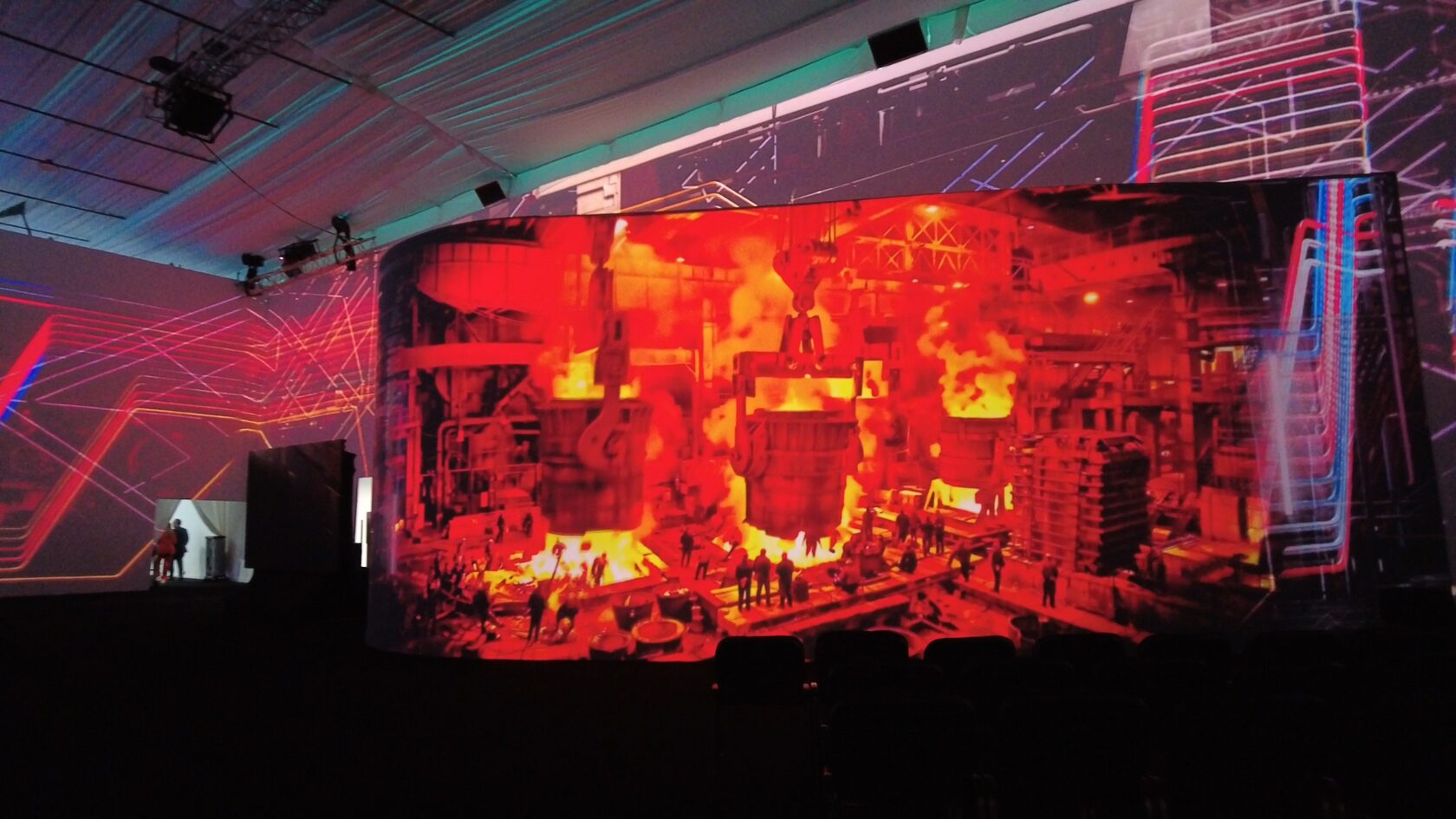
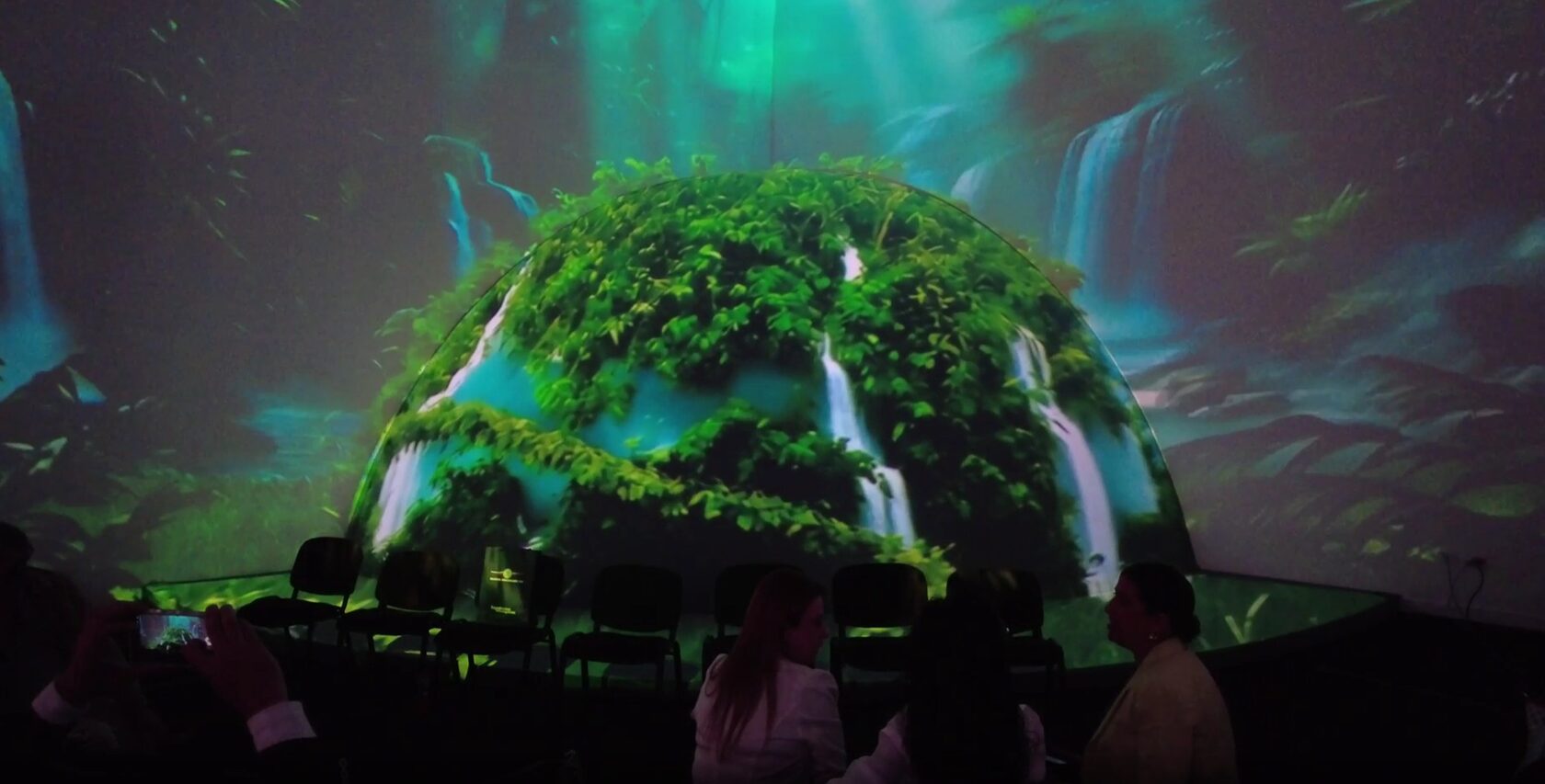
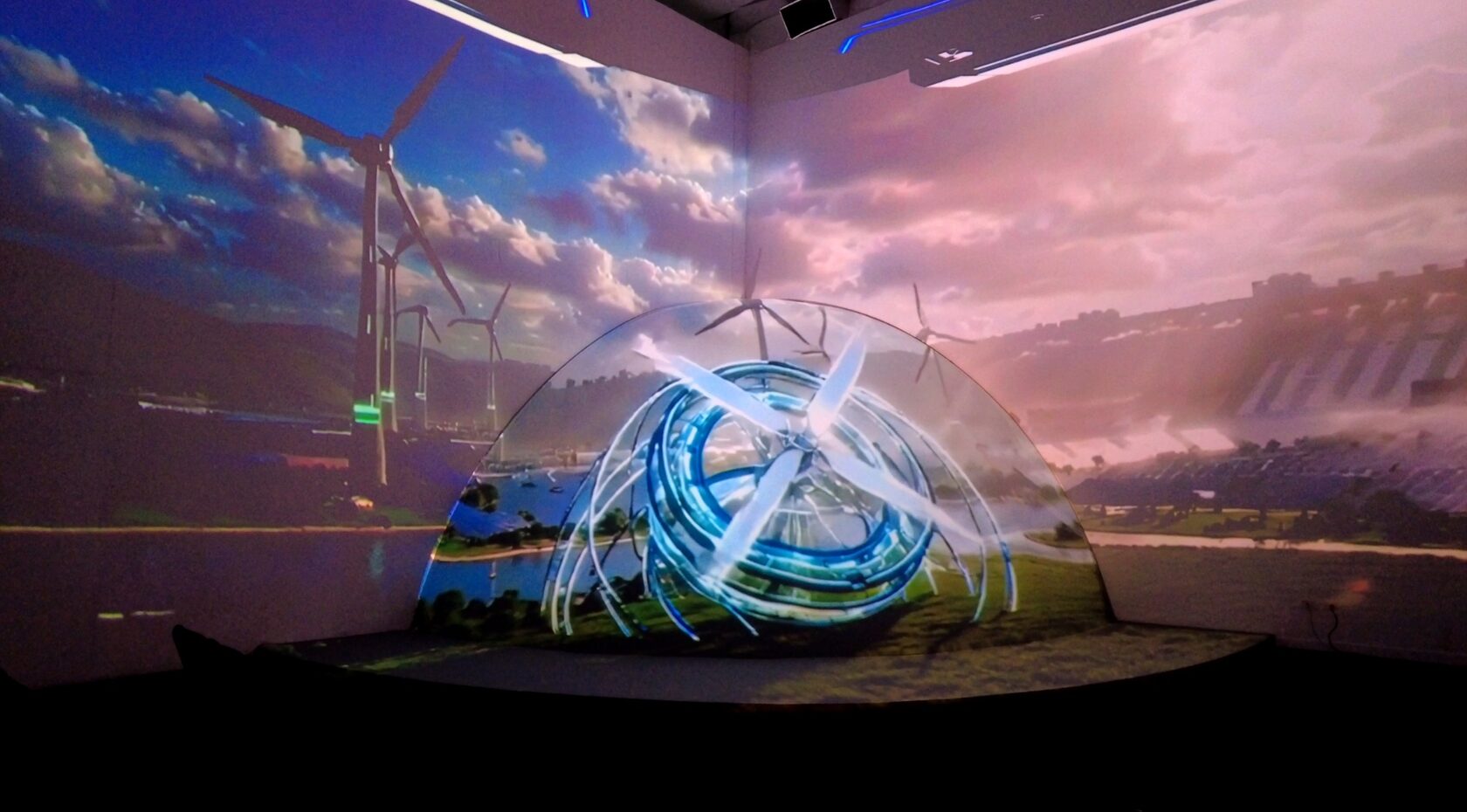
The shape of every object did the work, rather than simply accepting different pictures. The same surface became a forested hill under the northern lights, a laboratory dome, a planet beside a radio telescope. Another became an oil field, then a harvest, then a foundry.
Screens built into the mapping, not hung in front of it
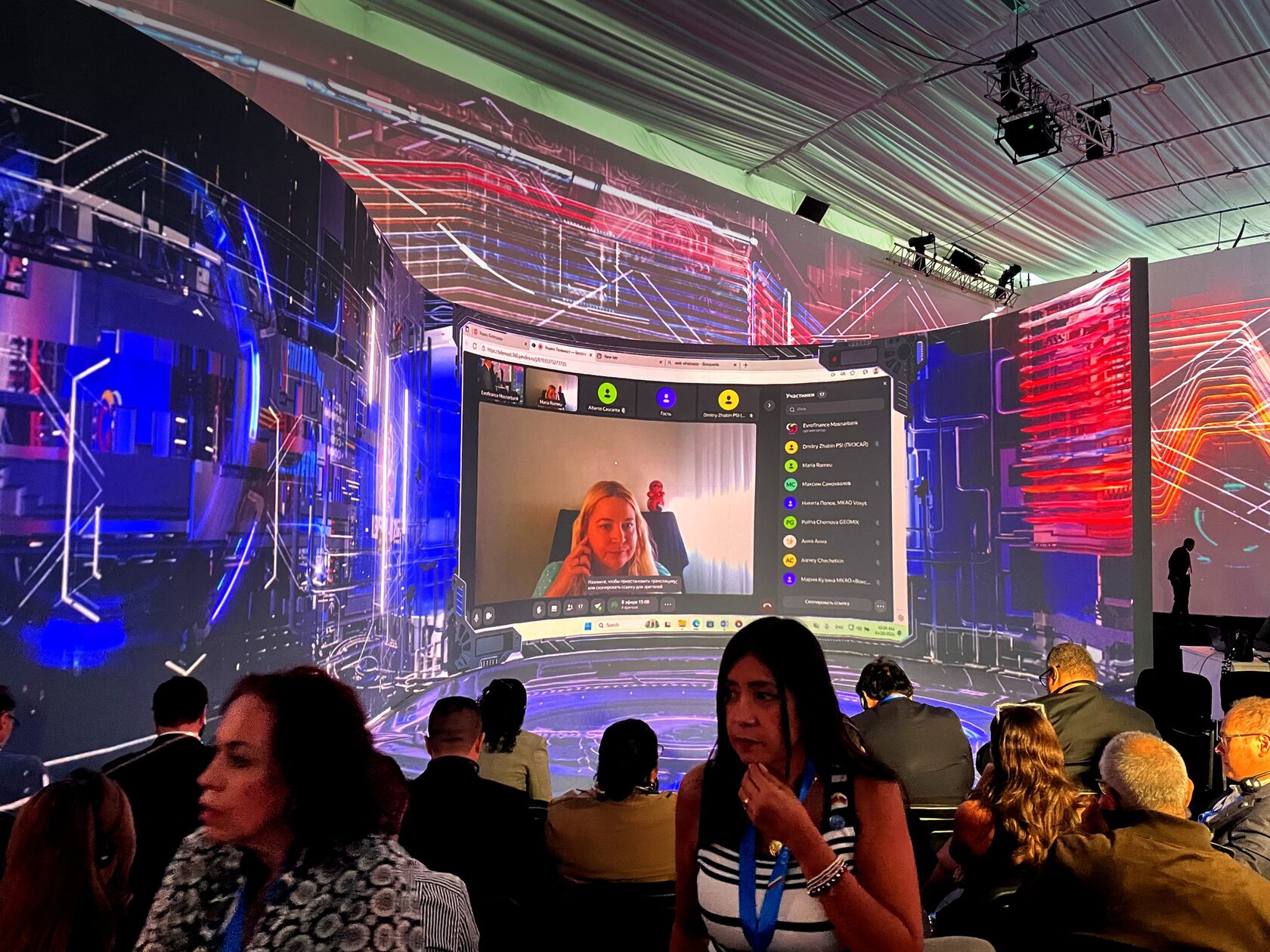
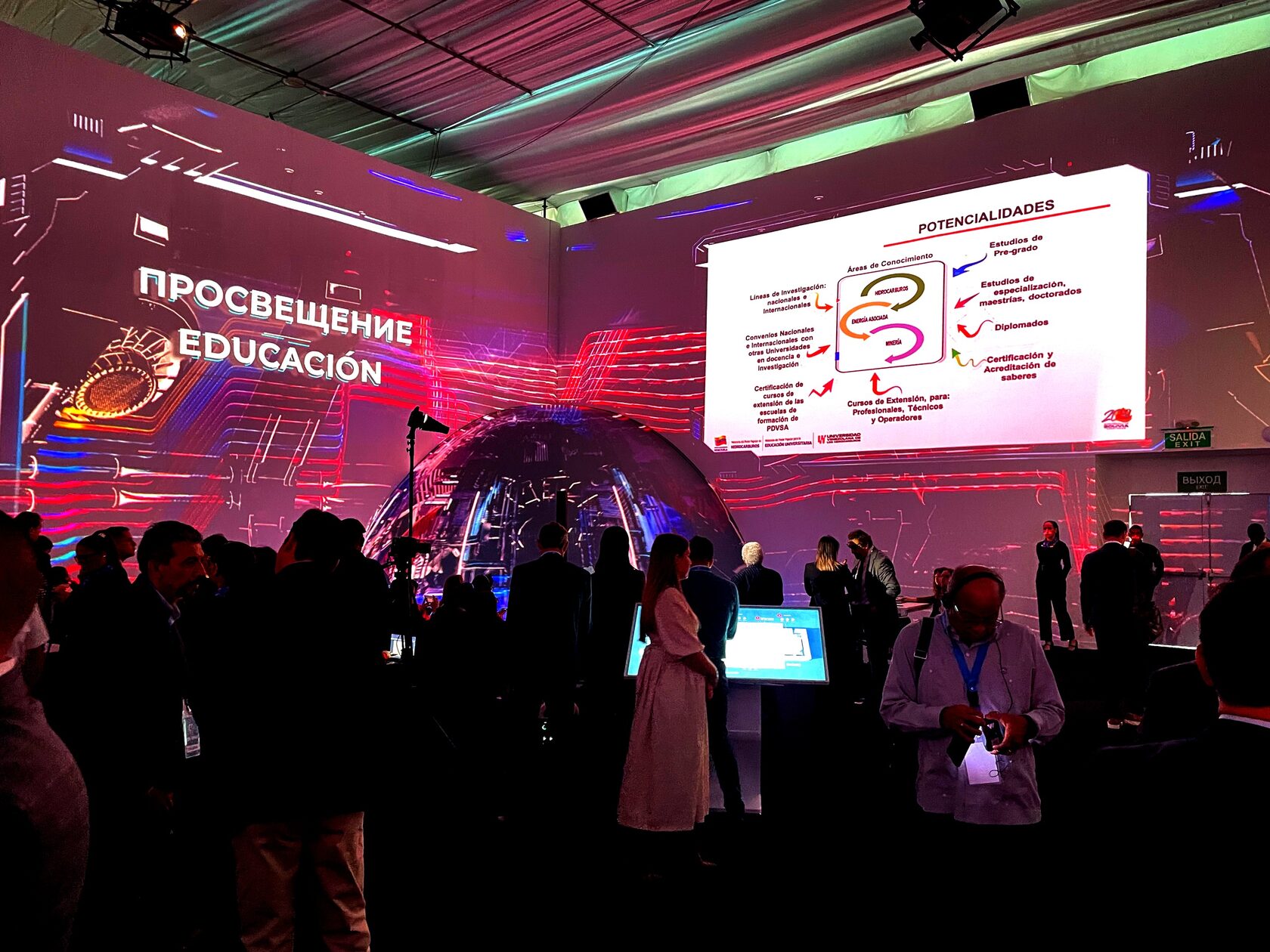
A conference normally puts a rectangular screen in the middle of a decorated wall, and the decoration stops existing. We designed the opposite: a looped projection environment with a slot cut into it for the speaker's slides, so the presentation sat inside the scene instead of covering it.
Each zone also carried its industry title in large type — a guest crossing 3,500 m² could tell at a glance which sector was speaking where.
Protocol
When heads of state are expected, a challenge appears that no budget accounts for. The day before the forum, the protocol service reviews everything against standards known only to them, and hands over a list of changes to be made within twelve hours.
By that point we had four content streams at over 20,000 pixels and half an hour of runtime. Re-rendering that overnight is physically impossible. We patched over the finished content instead — without recalculating the whole array and without breaking synchronisation. The patches were applied by local operators, and the scenes were explained to them in Spanish.
Engineering
Twenty-eight projectors at 25,000 lumens each. Five tonnes of projection and server equipment flown in from Russia; 650 m² of LED screens sourced locally. A single D3 server drove the mapping, the presentation feeds, a parallel esports broadcast and simultaneous interpreting into Russian and Spanish.
Outcome
376 companies, five hundred participants, and attendance several times above the client's forecast
The forum was covered by state media in both countries and described by the Russian embassy in Venezuela as the business event of the year.
Attended by Venezuela's senior leadership
One of the client's main objectives.
Every deadline met
Including the overnight protocol changes, confirmed in the client's letter.
The client's verdict
“The key outcome of the forum is a qualitative strengthening of the entire architecture of bilateral cooperation.” — Sergey Yarosh, President and Chairman of the Board, Evrofinance Mosnarbank
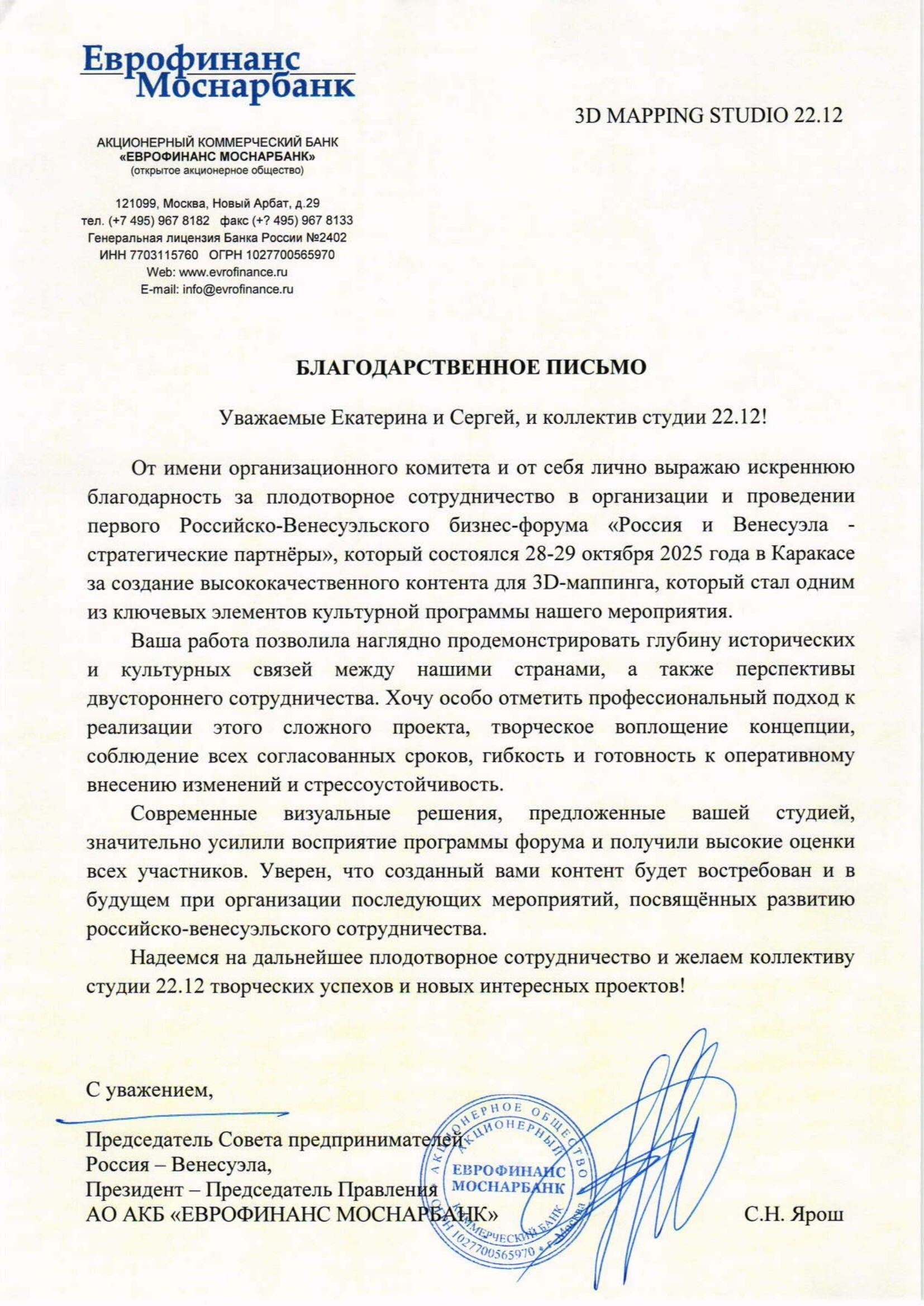
“I would particularly note the professional approach to a complex project, the creative realisation of the concept, adherence to every agreed deadline, flexibility and readiness to introduce changes at short notice, and resilience under pressure.” Sergey Yarosh, Chairman of the Russia–Venezuela Business Council, President and Chairman of the Board, Evrofinance Mosnarbank
You have the ideas but no technical brief?
That is our usual starting point. We shape the concept, cost it, and take it through to delivery — anywhere in the world.